Plannability
Fixed contributions create structure and make wealth building easier in everyday life.
FAQ
The most important questions about a precious-metal depot and Premium Elements 4.0: physical custody, risks, repurchase, metal allocation, costs, delivery and long-term saving.
Details
This FAQ does not replace a personal review. It helps organize the key questions before a consultation.
Tobias Schlegel, an independent PKM sales partner, explains acquisition, custody and use of the depot, including benefits, initial and ongoing costs, price risks and contractual restrictions. No prior product knowledge is required.
No. The form requests contact and a conversation. An application to open a depot is a separate step that follows only if you wish to proceed. No identity or income documents are required for the inquiry.
Premium Elements 4.0 is an individually usable precious metals depot that can be used to build physical precious metals over the medium to long term.
A precious-metal depot is a structured way to hold physical precious metals. Before deciding, it is important to understand the metals, ownership and custody arrangements, costs, sale options and the associated market risks.
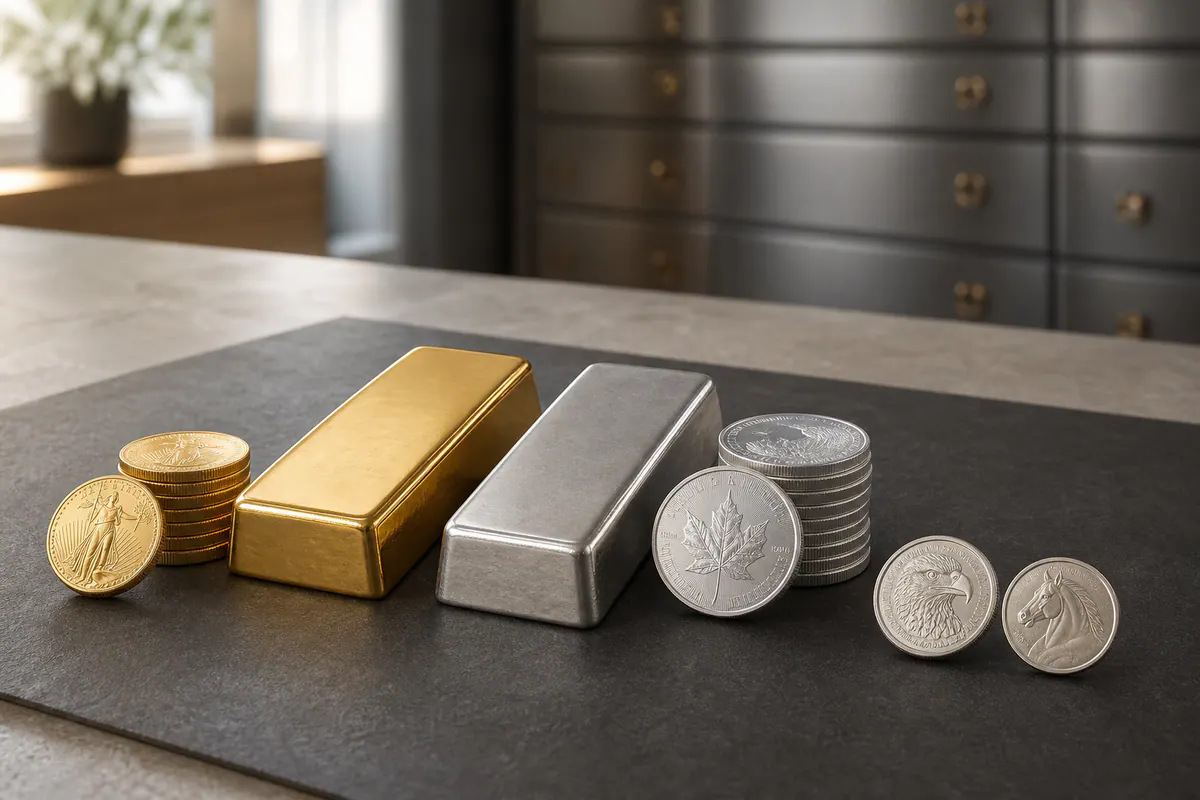
The focus is on gold, silver, platinum and palladium. The desired allocation can be discussed depending on goal, time horizon and risk appetite.
The precious metals are held physically. Gold is stored in high-security vaults in Germany, while silver, platinum and palladium are held in high-security areas of a Swiss bonded warehouse. Physical holdings are checked regularly.
Physical holdings are insured under the custody terms, including against typical risks such as theft, fire and water damage. The precious metals remain legally allocated to the customer; the specific contractual documents are decisive.
According to product information, pricing follows the daily LBMA fixing prices for gold and silver and the LPPM fixing prices for platinum and palladium. Premiums, discounts and fees depend on the transaction and applicable documents.
Depending on the arrangement, costs can arise for setup, account or contract administration, purchase and sale, custody, delivery or other services. The binding amount, timing and calculation are set out in the current product and contract documents and should be reviewed before a decision.
A buyback can generally be requested in text form without a minimum volume. According to the published product information, processing may take up to ten banking days; the buyback price follows the current fixing prices. The applicable contractual and bank terms apply.
An adjustment of the allocation between gold, silver, platinum and palladium can be requested by written instruction to the bank. Whether and how the switch is implemented depends on the contractual and processing conditions in force at that time.
Yes. The product approach is based on physically existing and stored precious metals, not merely price tracking. The exact ownership and custody structure is described in the application and contractual documents.
Bars are purchased from manufacturers certified by the LBMA or LPPM. A well-known example from Germany is Heraeus; actual availability depends on the professional precious metals market.
Physical precious metals have material value. However, this is not a guarantee of performance or selling price: prices can fluctuate substantially. Time horizon, risk tolerance and personal financial circumstances should therefore be assessed carefully in advance.
Holdings, transactions and current values can be viewed via Sutor Bank's digital customer portal. Access requires an activated customer connection and the portal's technical requirements.
Processing is connected with Sutor Bank GmbH in Hamburg. Founded in 1921, the German private bank manages more than 300,000 investment accounts, is a member of the Association of German Banks and is supervised by BaFin. In the intended custody structure, the precious metals are held in vaults of internationally recognised secure storage facilities: gold in Germany, and silver, platinum and palladium in a Swiss bonded warehouse. Holdings are sufficiently insured.
Buying yourself can make sense, but it raises questions about storage, insurance, documentation and later sale. The product structure combines purchase, custody and administration. According to product information, pooled customer orders may also be settled on professional-trade terms; a full comparison should always include all costs and conditions.
After the initial fee-settlement phase, contributions can be increased, reduced or paused under the applicable conditions. Payouts and physical deliveries may also then be possible. The specific contractual documents are decisive.
Early termination can trigger fees and offsetting effects. The published product FAQ mentions a bank fee of 50 euros; unpaid fees agreed in the application may be offset against the contract balance. The specific documents are binding.
For precious metals held as private assets, gains may be tax-free in Germany after a holding period of twelve months if the legal requirements are met. Special VAT rules may apply to silver, platinum and palladium in a bonded warehouse. This is not tax advice; please seek an individual assessment.
Physical delivery may be possible. Minimum quantities, bar sizes, fees and the relevant contractual rules apply; the product FAQ gives 100 grams as an example minimum quantity for gold.
Price fluctuations are part of the market. With regular purchases, a lower price can mean more precious-metal units are acquired for the same contribution. This cost-average effect does not automatically reduce risk and is not a guarantee of value.
A long-term savings plan spreads purchases across different market phases, creates planning certainty and enables gradual accumulation even with smaller contributions. It does not replace a personal decision: precious metal prices fluctuate, and all costs and the realistic investment horizon should be checked beforehand.
Long-term goals can make a structured approach worth discussing, but a precious-metal depot is not automatically suitable for every person or goal. Time horizon, liquidity needs, risk tolerance, costs and the wider financial situation should be considered individually before any contractual decision.
Savings plan
Fixed contributions create structure and make wealth building easier in everyday life.
Regular purchases spread entry points across different market phases.
Precious metals can complement existing monetary assets, insurance or securities.
A savings plan does not have to start with large capital; it can grow step by step.
Physical precious metals are real, tangible values with international significance.
The focus is not on short-term speculation, but on structured accumulation.
Regular purchases can reduce the importance of a single entry point.
Recurring contributions help integrate the accumulation process consistently into everyday life.
Under the contractual terms, contributions can later be adjusted or paused temporarily.
Digital access helps keep holdings and transactions transparent.
Precious metals can form a long-term tangible-asset component without guaranteeing value preservation.
Still open?
If anything is still unclear, we can classify it properly in a conversation.